
Golf courses have always understood the design power of water. A well-placed lake can define a signature hole, frame a green, or create a moment of risk and reward that players remember long after the round is finished. What is changing, however, is the expectation that these water bodies should also function ecologically. Increasingly, clubs are asking how their lakes and ponds can contribute meaningfully to sustainability goals while still enhancing the visual and strategic quality of the course.
BioHaven Floating Islands represent a new generation of water feature — one that integrates engineering, ecological science and member engagement into a single system.
Developed within the conservation framework of the nationally recognised 1 Million Turtles initiative led by Professor Ricky Spencer at Western Sydney University, BioHaven Islands are delivered through partnerships with Dockpro and Atlan Stormwater Australia. This collaboration brings together ecological research, floating marine infrastructure and stormwater design expertise to produce modular islands that are structurally robust, visually refined and biologically functional.
The mechanics of the system are central to its performance. BioHavens are constructed from interconnected buoyant modules engineered to carry significant downward loads. This allows the use of genuine soil-based vegetation pods rather than lightweight hydroponic inserts. The distinction is important. Soil media enables native wetland plants to establish naturally and develop extensive root systems that extend beneath the floating structure into the water column. Over time, these submerged root networks create dense, fibrous matrices that add vertical habitat complexity to otherwise open water.
That complexity drives ecological function. The roots provide refuge and spawning structure for fish and aquatic invertebrates, attachment surfaces for biofilms and microbial communities, and shaded microhabitats that moderate temperature at a local scale. Critically for golf courses, they also assist in intercepting dissolved nutrients such as nitrogen and phosphorus that enter water bodies during runoff events. While BioHavens are not a substitute for catchment-wide nutrient management, they act as biological interception zones within the pond itself, helping assimilate nutrients that might otherwise contribute to algal growth or reduced water clarity.
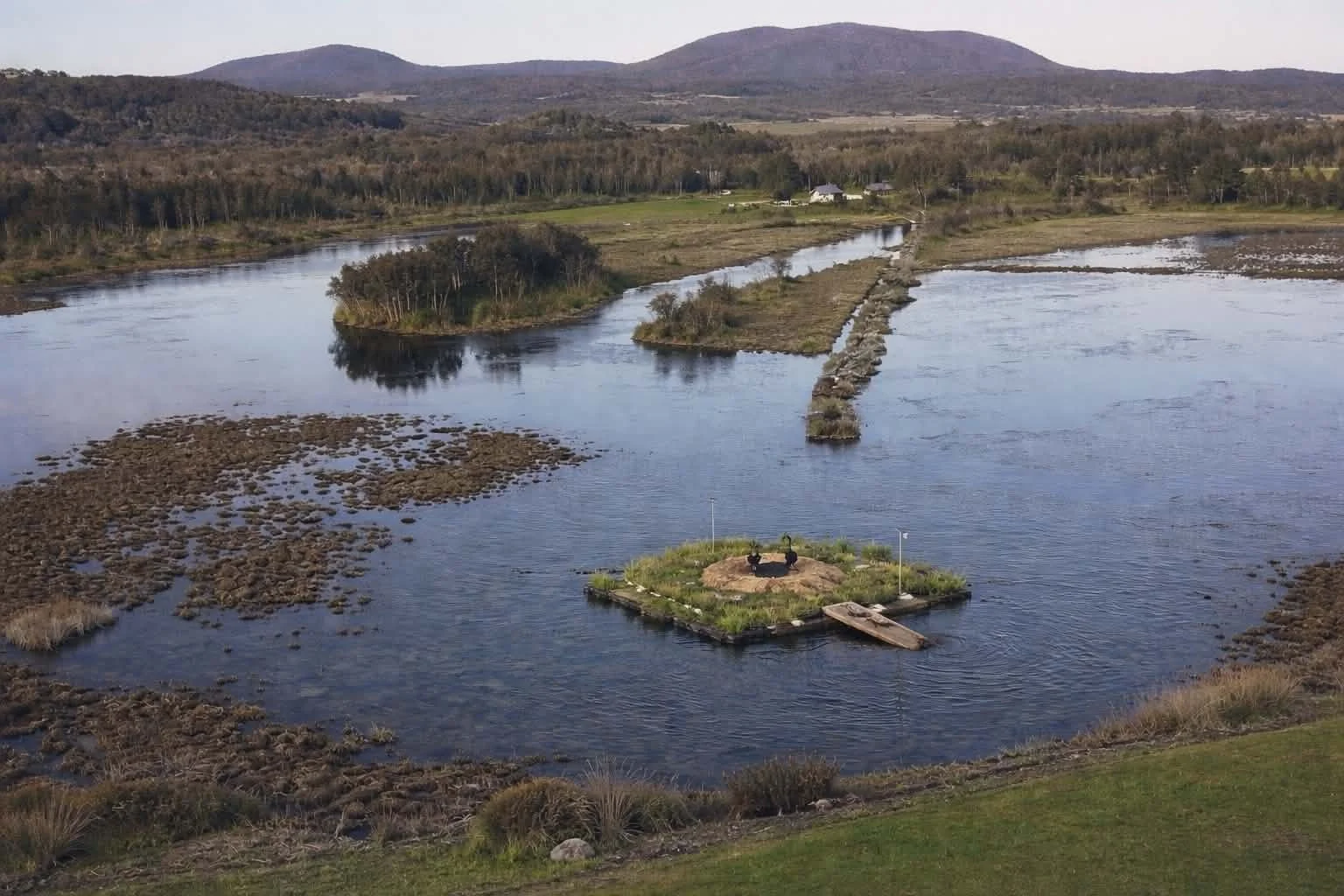
Biohaven Islands can cater for a variety of wildlife (and keep the nasty ones at bay)
From a design perspective, the vegetation pods offer significant aesthetic flexibility. Native sedges, rushes and flowering wetland species can be curated to create striking mid-water plantings that elevate the visual quality of premium water feature holes. Rather than appearing as purely engineered structures, well-designed islands read as naturalistic floating wetlands that soften hard water edges and enhance the landscape character of the course. Because the system floats, installation requires no major excavation and does not compromise playable turf. Islands can be repositioned, expanded or configured to suit changing design or maintenance priorities.
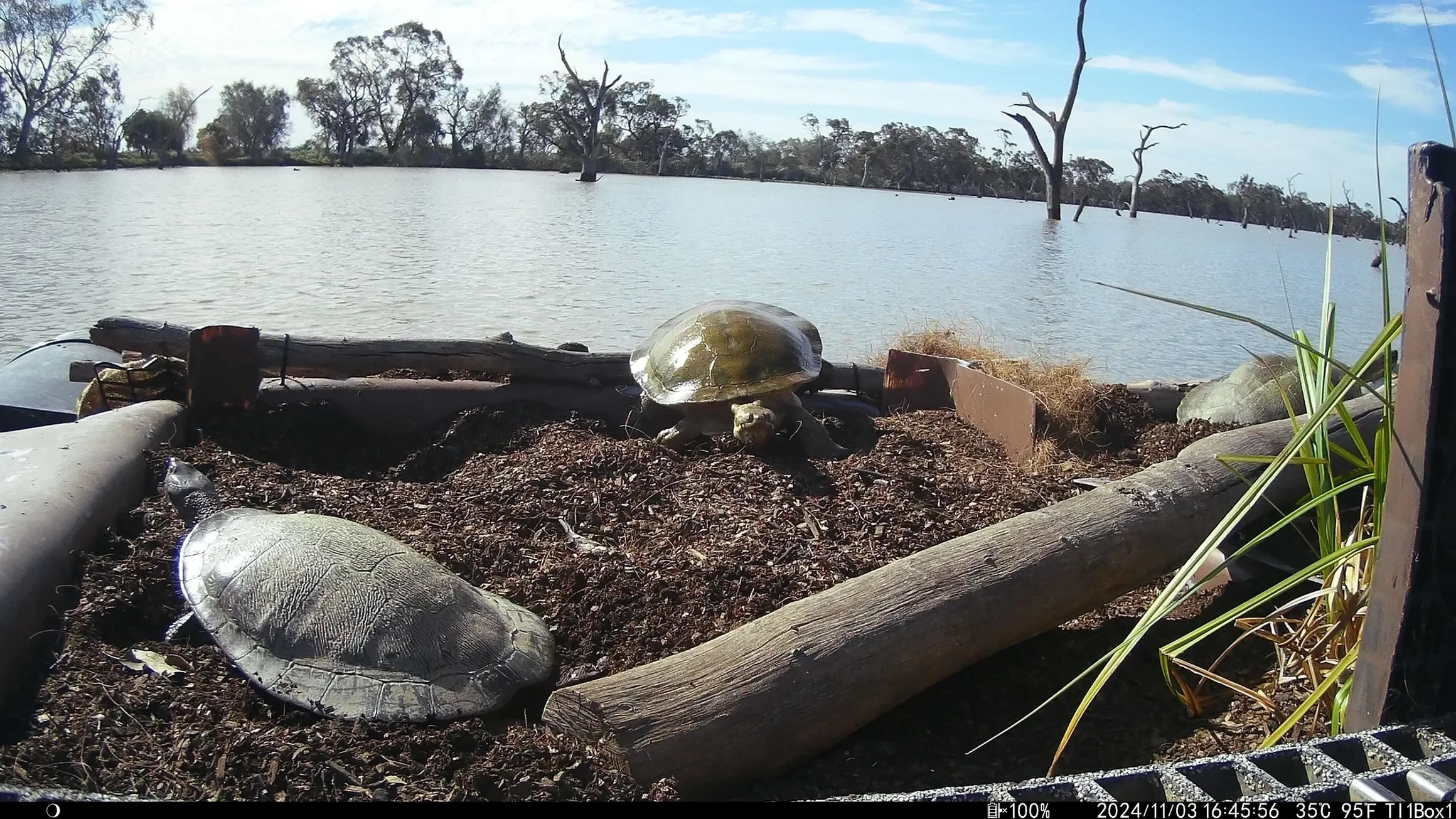
One of the defining strengths of the BioHaven model is its biodiversity flexibility. Although the system is strongly informed by freshwater turtle conservation through the 1 Million Turtles program, it is not limited to a single species focus. Structural adaptations can incorporate basking areas for turtles, discreet nesting substrates for native bees, microbat roosting modules integrated into the rear of the island, and submerged habitat elements designed to support native freshwater mussels. In open water environments where shorelines may be exposed to terrestrial predators, floating refuge can be particularly valuable. Swans, ducks, cormorants and other waterbirds quickly utilise the islands for resting and breeding, increasing the ecological activity visible to members.
The connection to 1 Million Turtles adds a further dimension beyond habitat creation. The program has generated tens of thousands of wildlife observations nationally through citizen science, and golf courses can become active contributors to this network. Members are able to record turtle sightings and other wetland wildlife, linking their local pond to a national conservation database. BioHaven installations can also incorporate live-stream wildlife cameras mounted on modular poles integrated into the island infrastructure. These cameras allow real-time observation of wetland life, connecting the clubhouse to classrooms and communities far beyond the course boundary. A water hazard becomes a living demonstration of environmental stewardship.
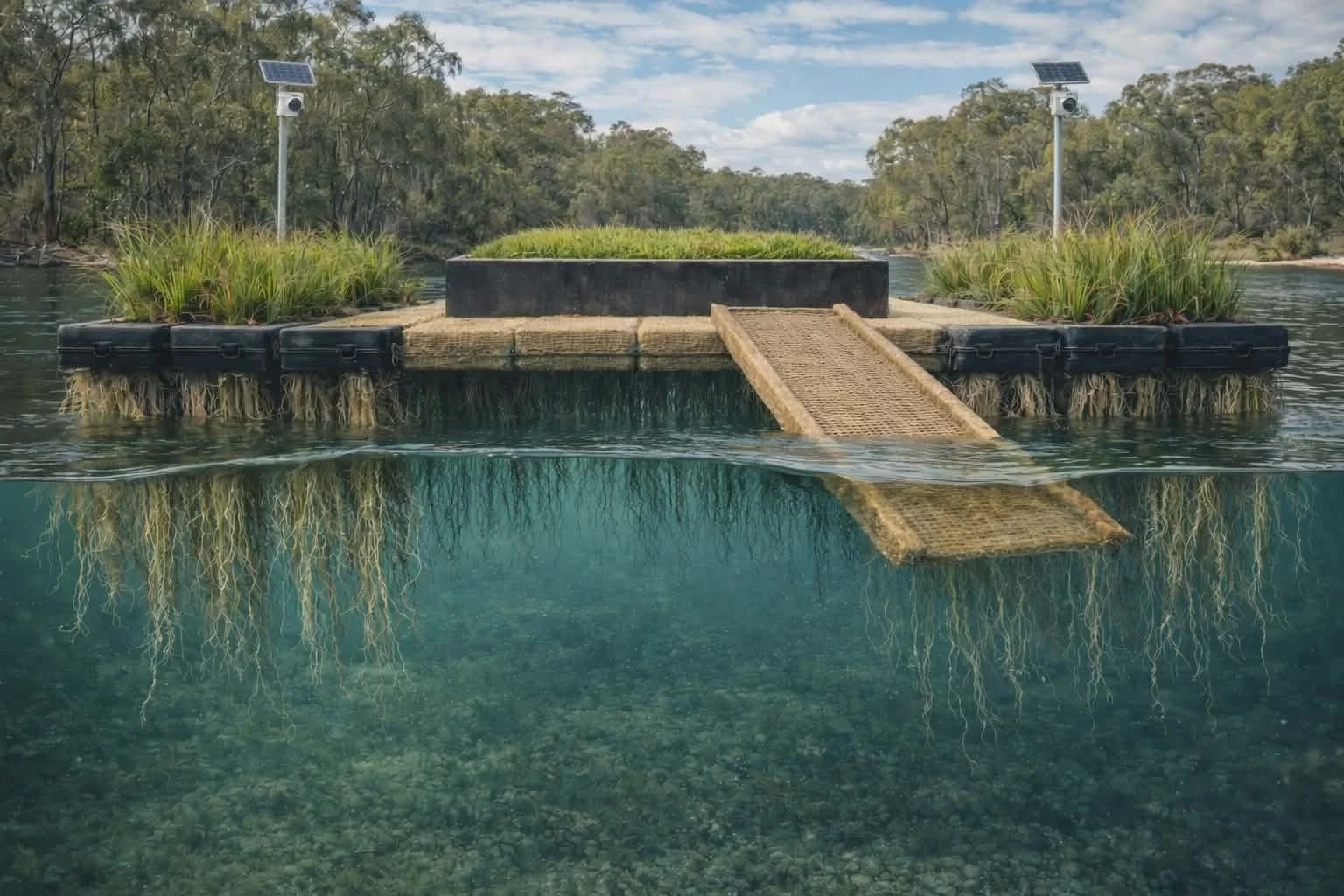
Modular by design
As expectations around environmental performance continue to rise, golf courses are uniquely positioned to demonstrate leadership. They manage extensive green and blue spaces within urban and peri-urban landscapes, and their water bodies represent untapped ecological assets. BioHaven Islands provide a practical mechanism to transform those assets into functioning, measurable and visually compelling habitats.
In doing so, they redefine the role of water on a golf course. A lake is no longer simply an obstacle or aesthetic feature. With the right engineering and ecological design, it becomes a working wetland, a biodiversity platform and a visible commitment to nature-positive golf.